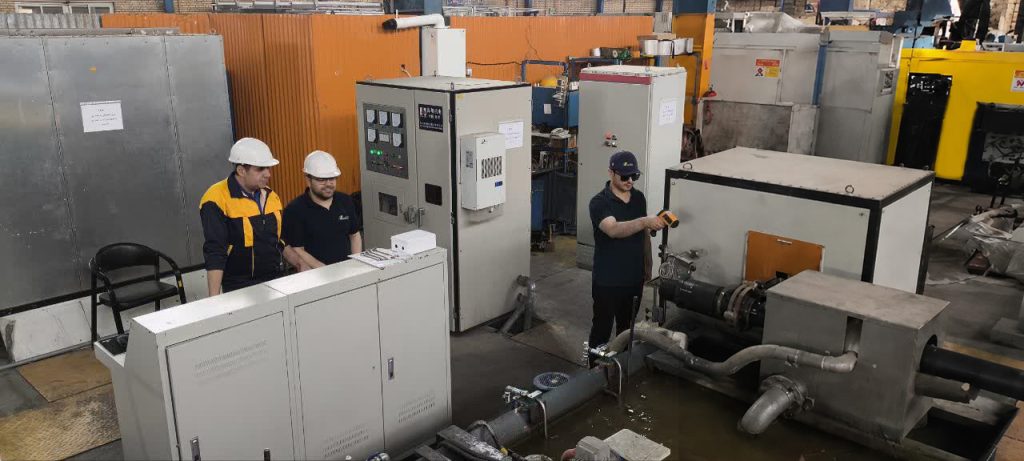
Types, Process Stages, and Industrial Applications of Heat Treatment
Heat treatment is one of the most important metallurgical processes used to modify
and enhance the mechanical, physical, and microstructural properties of metals
and alloys. During this process, a metallic material in the solid state is
subjected to carefully controlled cycles of heating, soaking (holding at
temperature), and cooling to achieve the desired material properties without
altering the component’s overall geometry or dimensions.
Today, heat treatment plays a vital role in industries such as steel manufacturing,
oil and gas, automotive, power generation, aerospace, heavy machinery, and
industrial equipment manufacturing. Many engineering components cannot meet
their required performance specifications without undergoing an appropriate
heat treatment process.
What Is It ?
It is a controlled thermal process in which a metal or alloy is heated
and subsequently cooled under specified conditions to modify its microstructure
and improve its mechanical properties.
Unlike metal forming operations, heat treatment does not significantly change the
shape or dimensions of the workpiece. Instead, its primary objective is to
optimize the internal structure of the material to achieve specific performance
characteristics.
Importance in Industry
Many metals and alloys do not possess the mechanical properties required for
engineering applications immediately after casting, forging, rolling, or
machining. Heat treatment provides an effective means of improving these
properties without altering the chemical composition of the material.
For example, steel components used in:
- Cutting tools
- Gears
- Shafts
- Bearings
- Oil and gas
equipment - Automotive
components
obtain their required hardness, strength, toughness, wear resistance, and durability
only after appropriate heat treatment.
Objectives of Heat Treatment
The primary objectives of heat treatment include:
- Increasing or decreasing hardness
- Improving yield strength and tensile strength
- Relieving residual stresses generated during welding, casting, forging, or machining
- Enhancing impact toughness
- Improving wear resistance
- Refining grain size
- Optimizing the metallurgical microstructure
- Extending the service life of engineering components
- Preparing materials for subsequent manufacturing processes
Primary Stages of Heat Treatment
Every heat treatment process consists of three fundamental stages.
1. Heating
During
this stage, the workpiece is heated to a predetermined temperature appropriate
for the alloy composition and the intended heat treatment process.
The
heating rate must be carefully controlled to minimize thermal gradients,
thereby preventing excessive thermal stresses, distortion, and cracking.
2. Soaking (Holding at Temperature)
After
reaching the target temperature, the material is maintained at that temperature
for a specified period to ensure:
- Uniform temperature distribution throughout the component
- Complete phase transformation
- Homogeneous diffusion of carbon and alloying elements
- Achievement of the desired microstructure
The required soaking time depends on the material composition, section thickness,
and heat treatment objective.
3.Cooling
The final stage involves cooling the component at a controlled rate.
The cooling rate is the most critical factor governing the final microstructure and
mechanical properties of the material.
Cooling
may be performed using various quenching media, including:
- Air
- Water
- Oil
- Polymer
solutions - Molten salt baths
- Controlled atmosphere gases
The choice of cooling medium depends on the steel grade, desired hardness,
dimensional stability, and risk of distortion or cracking.
Major Types of Heat Treatment for Steel
Annealing
is a heat treatment process in which steel is heated to a specified temperature
and then cooled slowly, usually inside the furnace.
Advantages
- Reduces hardness
- Improves
ductility - Enhances
machinability - Relieves
internal stresses - Produces a more
uniform microstructure
Normalizing
In the normalizing process, steel is heated into the austenitic region and
subsequently cooled in still air.
Advantages
- Grain refinement
- Increased strength
- Improved structural uniformity
- Better mechanical properties compared with annealed steel
Hardening (Quenching)
During
quenching, steel is first austenitized and then rapidly cooled in water, oil,
polymer solution, or another quenching medium.
Advantages
- Significantly increases hardness
- Improves wear resistance
- Produces a martensitic microstructure
- Enhances strength
Because quenching can introduce high internal stresses and brittleness, it is commonly
followed by tempering.
Tempering
Quenched
steel generally exhibits very high hardness but relatively low toughness.
In the tempering process, the hardened steel is reheated to a temperature below
the critical transformation temperature and then cooled under controlled
conditions.
Advantages
- Reduces brittleness
- Increases toughness
- Relieves residual stresses
- Improves dimensional stability
- Achieves a desirable balance between hardness and ductility
Austempering
Austempering
is an advanced heat treatment process designed to produce a bainitic
microstructure while minimizing the residual stresses associated with
conventional quenching.
Advantages
- Reduced distortion
- Improved fatigue resistance
- Higher toughness
- Better dimensional accuracy
- Lower risk of cracking
Surface Heat Treatment Processes
For many engineering components, only the surface requires high hardness while the
core must retain adequate toughness.
The most common surface heat treatment methods include:
- Induction Hardening
- Flame Hardening
- Carburizing
- Nitriding
- Carbonitriding
These processes produce a hardened wear-resistant surface while maintaining a tough
and ductile core, making them ideal for components subjected to cyclic loading
and abrasive wear.
Heat Treatment Equipment
Industrial heat treatment operations are carried out using specialized equipment,
including:
- Electric furnaces
- Gas-fired furnaces
- Vacuum furnaces
- Controlled-atmosphere furnaces
- Induction heating systems
- Molten salt bath furnaces
- Industrial quenching systems
The proper selection of heat treatment equipment has a direct impact on process
consistency, metallurgical quality, dimensional accuracy, and final component
performance.
Conclusion
Heat
treatment is one of the fundamental processes in materials engineering and
metallurgy, enabling engineers to tailor the microstructure and mechanical
properties of metals and alloys through precise control of temperature, holding
time, and cooling rate.
The appropriate selection of a heat treatment process can significantly improve the
strength, hardness, toughness, wear resistance, reliability, safety, and
service life of engineering components. Consequently, heat treatment remains an
indispensable part of modern manufacturing across industries such as oil and
gas, aerospace, automotive, power generation, heavy machinery, and industrial
equipment production.